.jpg)
Biochar for Gardening: How to Use Biochar in Soil
If you’re looking to take your soil to the next level—whether you're planting a pollinator garden, reviving a worn-out lawn, or installing large-scale landscape beds—biochar and SuperCHAR can give your soil a powerful, lasting boost.
Let’s break down what they are, how they work, and which one is right for your project.
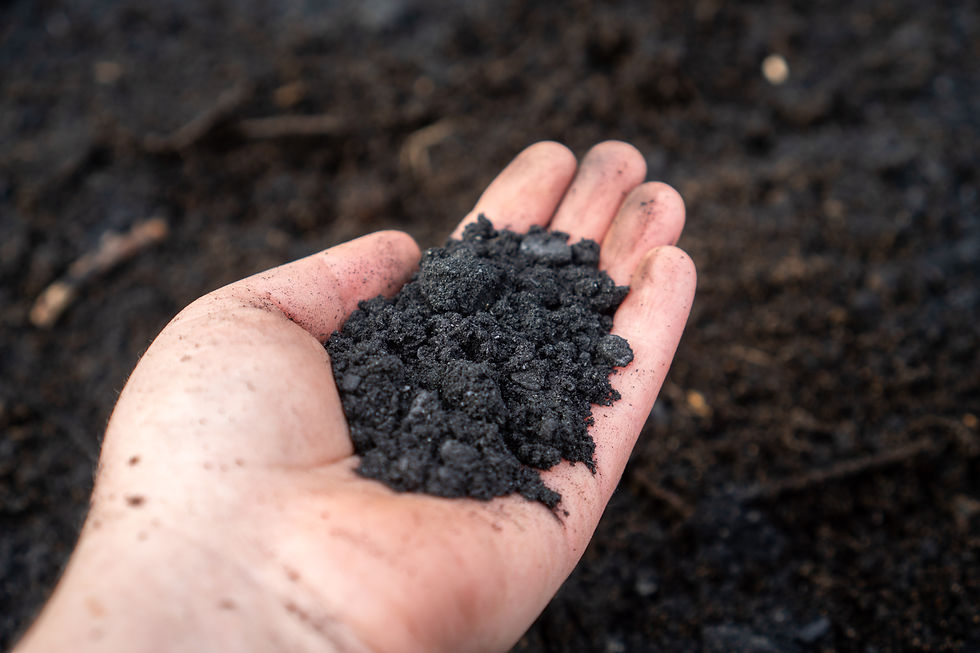
Biochar is a charcoal-like material we make by heating recycled wood waste in a low-oxygen environment—a process called pyrolysis. This creates a stable, carbon-rich product that looks like small black chips or flakes.

While it’s not a fertilizer, biochar is a natural soil conditioner that:
Improves moisture retention
Reduces nutrient leaching
Enhances microbial life in the soil
Helps balance pH in overly acidic soils
Supports long-term soil structure
It’s particularly valuable in remediating compacted or chemically damaged soil, making it a great choice for areas that have suffered from over-fertilization or heavy traffic.
The Impact of Biochar
In addition to helping plants thrive, biochar also helps the planet. By converting organic material into a stable form of carbon, biochar keeps carbon out of the atmosphere—each pound of biochar keeps approximately 2 pounds of CO₂ from being released.
That means every bed, lawn, or landscape project that uses biochar is also part of a long-term carbon solution.
The Challenge with Raw Biochar
Here’s the catch: while biochar is an excellent soil conditioner, using it raw isn’t ideal. Biochar is more effective when mixed with compost.
Biochar and Compost Blend
SuperCHAR is our premium, ready-to-use blend made from recycled wood waste that’s been pyrolyzed into biochar—then mixed with nutrient-rich yard waste compost.
We let the compost and biochar work together, naturally charging the biochar with nutrients and microbes, so it’s ready to benefit your soil immediately.

SuperCHAR Makes It Simple
Combines the long-term benefits of biochar with the mid-term boost of compost
Delivers nutrients and microbial life right away
Ideal for landscaping projects, gardens, turf, tree plantings, and more
Biochar vs. SuperCHAR: A Quick Comparison
Feature | Biochar | SuperCHAR (Ready-to-Use) |
Nutrient Content | None initially | Rich in compost nutrients |
Microbial Activity | Needs time to develop | Loaded with beneficial microbes |
Best Use Cases | Soil blending, compost mixing | Beds, turf, landscapes, containers |
Ease of Use | More labor-intensive | Simple, fast, and effective |
How Gardeners and Landscapers Use SuperCHAR
Whether you're growing tomatoes or installing a large landscape, SuperCHAR is flexible and easy to apply:
Raised beds & veggie gardens: Mix into the top 6–12 inches of soil.
Lawns: Spread before aeration or seeding for better root development and moisture retention.
Landscape beds & tree installations: Blend into the backfill or topdress around drip lines.
Potted plants & containers: Improves drainage, nutrient retention, and reduces watering frequency.
Soil restoration: Use in compacted, tired, or nutrient-depleted soil to kickstart regeneration.

Why Choose SuperCHAR?
We made SuperCHAR because we believe biochar should be easy to use and highly effective for home gardeners, professional landscapers, and soil health enthusiasts alike.
It’s our way of helping you build healthier soil, stronger plants, and a greener planet—without the guesswork.
Want to try SuperCHAR for your next project? Order online at store.stlcompost.com/product/compost/superchar-compost/.
References:
Gambill, P., Perez, L., Elam, B., & Brandli, J. (2022, April 9). The effects of biochar on turf grass: An introductory investigation. University of Arkansas – Fort Smith Student Research Symposium. https://uafs.edu/academics/academic-resources/symposium/_documents/elam-gambill-perez.pdf
Guo, F., Wang, C., Wang, S., Zhao, X., Li, G., & Sun, Z. (2024). The native SOC increase in woodland and lawn soil amended with biochar surpassed greenhouse — A seven-year field trial. Science of The Total Environment, 907, 167924. https://doi.org/10.1016/j.scitotenv.2023.167924
Murray, M. (2021, January). What is biochar and how is it used? Utah State University Extension, Plant Health. https://extension.usu.edu/planthealth/research/biochar
Vanno, S. (2021, November). Biochars and their uses in agriculture. Cornell Cooperative Extension, Warren County. https://warren.cce.cornell.edu/gardening-landscape/warren-county-master-gardener-articles/-biochars-and-their-uses-in-agriculture


Comments